This year I spent the spring equinox with friends in Derbyshire, visiting two of the stone circles from the Bull Tor triangle. The journey between these circles and the exercises carried out at each of them are the subject of the book The Dancing Circles (see an earlier article here). This time we visited Arbor Low and Eyam Moor Stone Circle, and I have a little bit to say about our time at Arbor Low.
Arbor Low Stone Circle by Graham Hogg, via Wikimedia Commons
Thursday was unusually warm and sunny, but approaching Arbor Low in the morning there was a white haze blanketing the hills, like a cocoon under which spring was being prepared. The trees were beginning to bud, and crocuses were in flower in the circle itself. Sky larks were trilling in the air above us.
The exercise for Arbor Low aims to still the mind, and consists of visualising the sun’s progress through the sky from sunrise to sunset, taking about ten minutes for the entire imaginary arc. The equinox is a good day to do this exercise, because the sun rises due east, sets due west, and rises to a point due south of the zenith at noon. This arch of course extends under the earth, where the sun travels at night, making a circle with a spindle through the centre which points towards the north star.
The exercise did seem to work, and perhaps there is something about the nature of the sun’s motion that helps. We know it moves across the sky, but it looks stationary. The exercise brings an awareness of this contrast into the mind, so that we can experience both change and stillness, and perhaps be aware of the bigger world we live in.
I first encountered the idea of lunar standstills at the Callanish stone circle on the Isle of Lewis in the Outer Hebrides. The story is that every 18.6 years, the moon goes through a major standstill, where it rises only a few degrees, and appears to roll along the horizon. From the viewpoint of Callanish, the moon runs along hills which have the appearance of a woman lying on her back, the so-called Sleeping Beauty or Cailleach of the Moors. After a few hours the moon sets, and then momentarily it re-appears silhouetted in a valley on the horizon. If you stand outside the circle of Callanish, the moon passes among the stones. The last major standstill was in 2006, and so the next one is due in 2025, although the effects can be seen now!
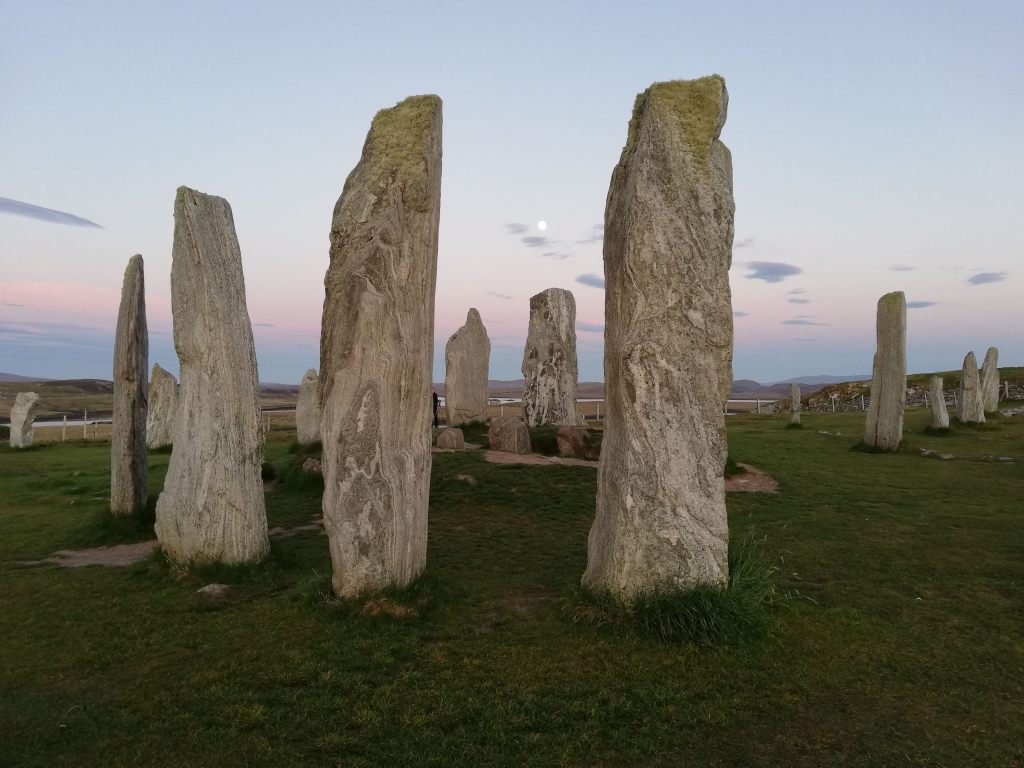
Shown below is a picture I took of the stones at Callanish with the moon behind them when I visited in May 2019. The moon was quite high at the time (peaking at around 20° above the horizon). During a standstill the moon only rises to about 3°, and because it is close to the horizon, it appears much larger!
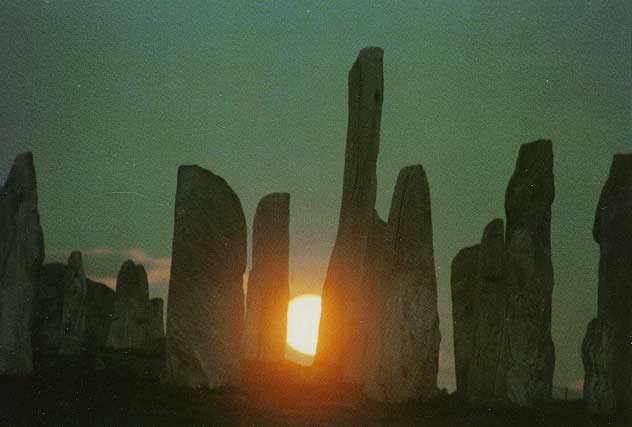
Shown below is a photo showing what the moon looks like at the standstill, with a full moon walking through the stones. (Photo from the late Margaret Curtis at https://www.geo.org/callan.htm.).
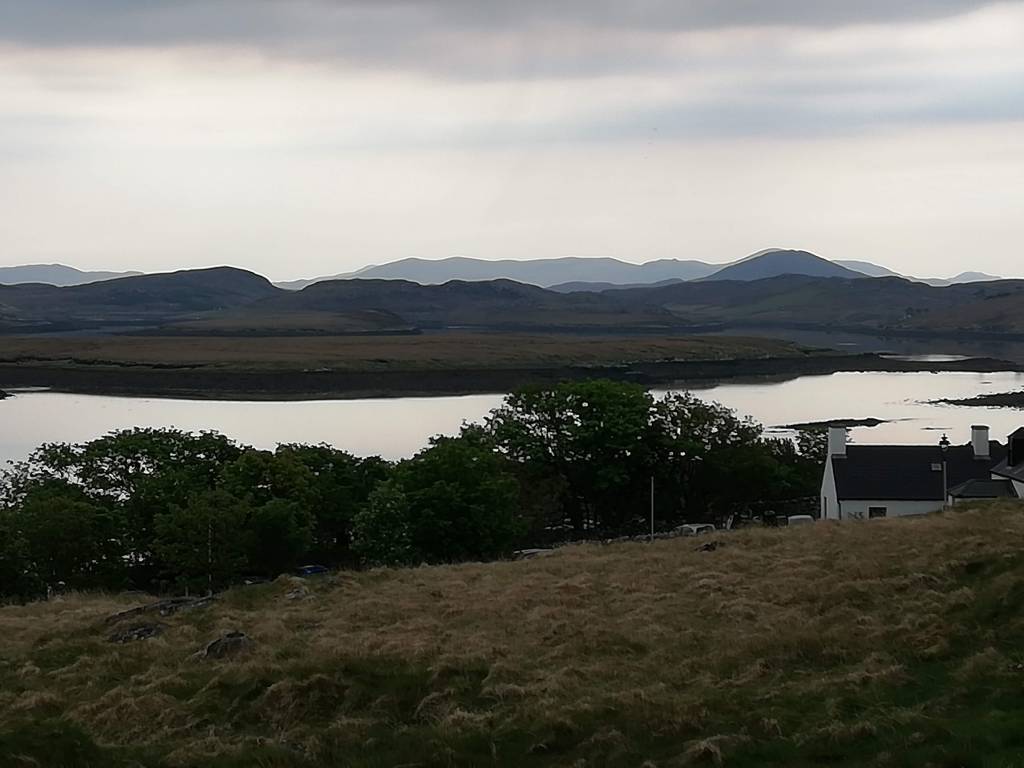
Shown below is a photo I took of the Sleeping Beauty hills from Callanish. I think the grey ones in the background are the woman, with her head to the right, laying against the ‘pillow’ of the closer hills. As you move around the island, you can still see the woman, although the outline changes a bit. From nearby Achmore stone circle, for example, the arrangement of hills makes her appear pregnant. You might like to read Jill Smith’s article on walking the Sleeping Beauty Mountain: https://goddess-pages.co.uk/galive/issue-19-home/walking-the-sleeping-beauty-mountain/
Where else do we see the standstill?
The major lunar standstill can be seen everywhere. If you are much further north than Callanish, the moon sometimes doesn’t rise at all at the standstill. At lower latitudes the moon rises higher, but still at a minimum altitude. In London for example the moon rises to about 9°, less impressive but still worth watching. If you’re in the southern hemisphere, then you get the same effect, but at a different time of year.
When can we see the standstill?
We are talking about a long (18.6 year) cycle, and so we can see the effects of the standstill (at least to some extent) for a few years on either side of the main date. We can see an echo every month (well, every 27.21 days) when the moon is at the right place in its orbit. Of course it isn’t noticeable every month, because sometimes the moon is rising in daylight or is a very thin crescent. It’s more noticeable when the moon is full. For this sequence we get a good chance of seeing it this year on 21st/22nd June 2024, and next year on 11th/12th June 2025. Details are included at the end of this article. Of course you have to have clear weather to see it properly!
Why 18.6 years?
Understanding the interval of 18.6 years between major lunar standstills is tricky (and I’m still not 100% sure I understand it), so you can skip this bit if you like!
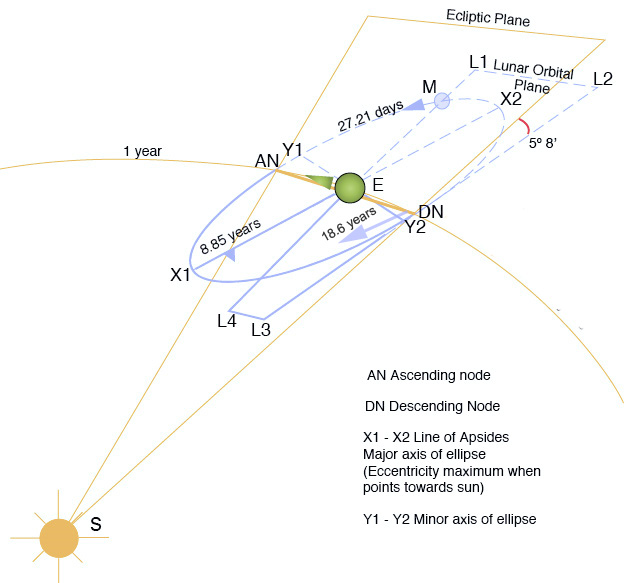
We have to look at the way the moon goes round the earth, and the earth goes round the sun. The diagram below illustrates the orbits. The earth (green) goes around the sun, each orbit taking a year. The plane of the earth’s orbit, called the ecliptic, is shown in yellow. The moon (blue), goes round the earth, but its (blue) orbit is not in the same plane as the ecliptic – it is tilted, by about 5.1˚ So, during one orbit, as it goes around the earth, the moon rises above the ecliptic plane, and then falls below it. The two points where it crosses over the ecliptic are called the lunar nodes: the ascending node (AN in the diagram) and the descending node (DN). The moon takes 27.21 days to make a full orbit through the nodes (this is called a draconic month).
The orientation of the tilt in the moon’s orbit about the earth changes over a period of about 18.6 years. In the diagram as shown, the line joining the nodes is more or less perpendicular to the earth-sun line. But this line rotates so that, about 9 years later, the two nodes will line up with the sun-earth line. This is important for predicting eclipses, because an eclipse can only take place when the sun, moon and earth are aligned, which only happens if the moon is in the plane of the ecliptic (at one of the nodes).
But for major lunar standstills, we’re interested in the points where the line between the nodes is as shown in the diagram. This is because the moon in its orbit is reaching as far as it can above and below the ecliptic.
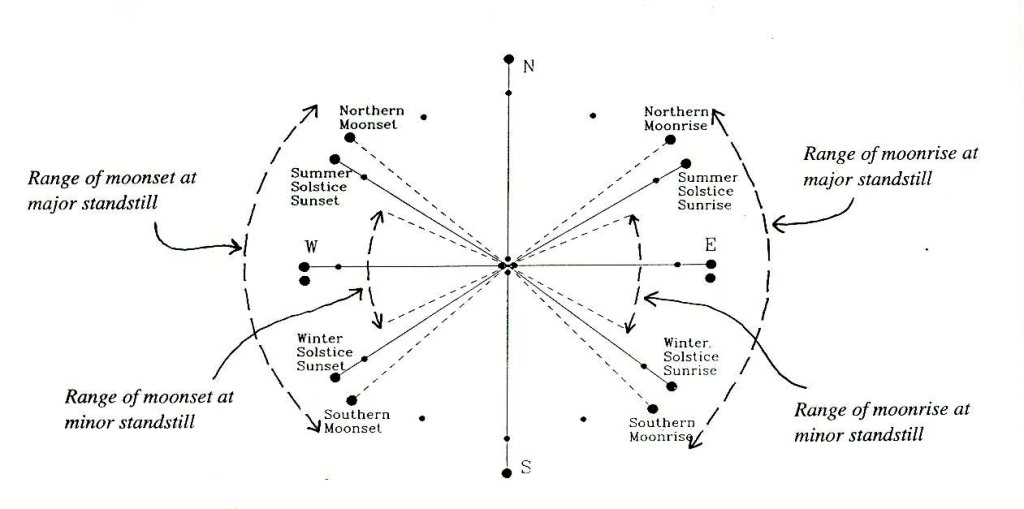
The diagram below illustrates what we see on earth. Each night the moon rises somewhere in the east, and sets at a corresponding point in the west. Every night the moonrise moves along the horizon between two limits in the north and south. The moon rises higher when the moonrise and set are in the north, and it rises less when the rise and set are in the south.
The north and south limits also move – on the 18.6 year cycle. At the major standstill, the moonrise swings in a single month from far north-east to south-east. For example in June 2025 at Callanish, the moonrise will swing between 26˚ in the northeast, to 155˚ in the southeast. Half-way through the 18.6 year cycle (at what is called the minor lunar standstill) the range of the moonrise across the month is smaller. For example in February 2016 at Callanish, the moonrise swings between 54˚ in the northeast, to 127˚ in the southeast.
The most recent standstill was in 2006, and there is a blog by Gerald Ponting recording the event at Callanish, covering 11th-12th June: http://home.clara.net/gponting/page44.html
According to https://www.timeanddate.com/moon/@2653988?month=6&year=2006 The moon rose at 23:38 on 11th June, at 154˚ (about 25˚ East of South) The moon set at 03:41 on 12th June at 205˚ (about 25˚ West of South) The moon peaked at 01:40 on 12th June at an altitude of 2.8˚.
According to Gerald’s blog, the moon appeared above the sleeping figure at 12:11, and was clear of the horizon at 12:20. He didn’t see the ‘regleam’ where the moon re-appears momentarily before finally setting.
Drawing the 154˚ and 205˚ arcs on the map points roughly to the sleeping beauty (moonrise) and Glen Langadale (regleam). Both of these are on the southern part of Lewis. According to Margaret Curtis, Glen Langadale is hidden by hills to the south of Callanish, but the recleam effect is gained within the circle as the setting moon appears from behind the rocky hillock next to the circle (Cnoc an Tursa).
The 2024 and 2025 Standstill
The following moon data for Callanish illustrates that from June 2024 to June 2025, the effect repeats more of less the same, on a monthly basis. It is more easily observed at the full moons which occur near the Summer solstice.
A friend recently told me about an easier way of thinking about the timing of the major lunar standstills. They come about when the moon’s north node (the dragon’s head) enters the sign of Aries. This makes sense (I think), because the line between the moon’s nodes represents the axis of tilting of the moon’s orbit, and the line between 0˚ Aries and 0˚ Libra is the axis of tilting of the sun’s orbit, so when they align is when their tilts can add and subtract the most. This also has the benefit of being able to define a precise time for the standstill (even though it has a monthly effect for a couple of years). Using the moon’s true node position, the Ephemeris gives a date of 12th January 2025 for the next major lunar standstill. A similar lookup gives the date of the previous one as 22nd June 2006, and before that 3rd December 1987, 20th April 1969 and 27th July 1950.
New, New Information!
I’m told by those who know that the upcoming date and time for the dragon’s head passing through 0˚ Aries (for London) is 5:41pm on Saturday 11th January 2025.
The British Mysteries is an oral tradition. This means it is handed from one person to another in a living chain. There may be many people in the chain or few, but the old adage ‘when the student is ready, the master will appear’ is often true.
An oral tradition relies on human interaction. This means that your ‘master’ is likely to be just another ordinary human being. Actually I prefer to use the word ‘guide’ as this is the role that includes everyone and does not have the idea of one person being somehow ‘higher’ than the other. The only difference between you is that the guide will be able to show you some signposts.
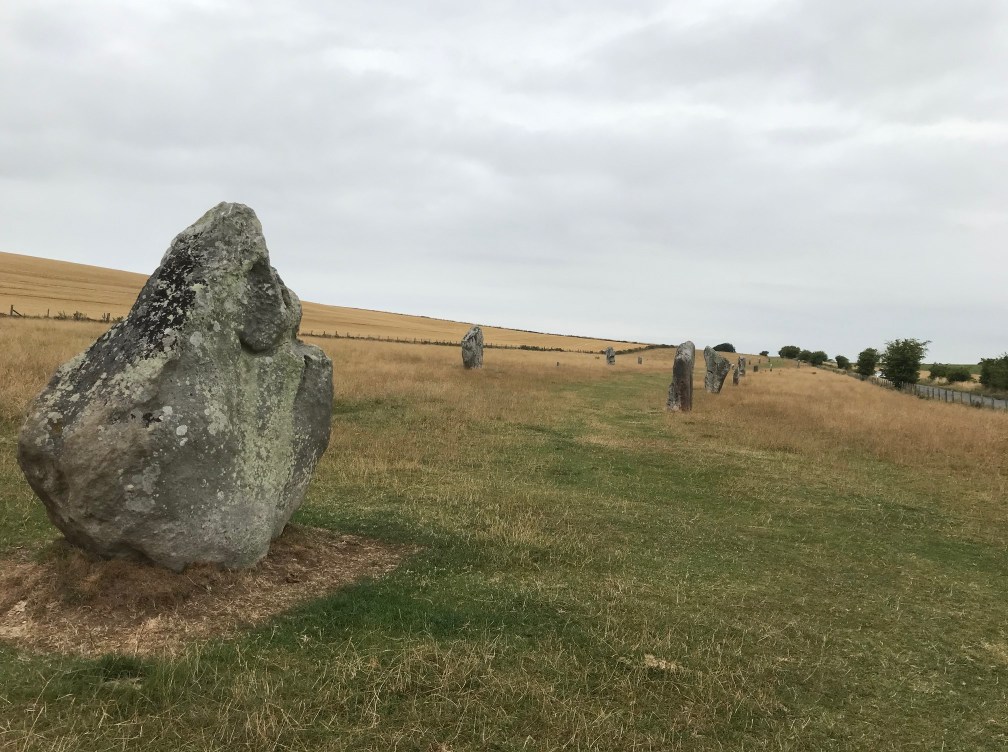
Recently I was at Avebury where there is a great avenue of stones that points the way to the main circle, or gathering place. Once you are at the bottom of the hill facing the stone pathway it is obvious where to go. You follow the stones like a bird following breadcrumbs. At one point the stones disappear because a road has been built through the middle of the approach. A bit of searching, and they reappear, but if they did not, you might need a guide to help you find the next sign. The guide’s function in this oral tradition is to place the signposts for you to follow. You still need to make the journey yourself. A real guide will not make promises, tell you what you will find when you get there, or spoon-feed you answers.
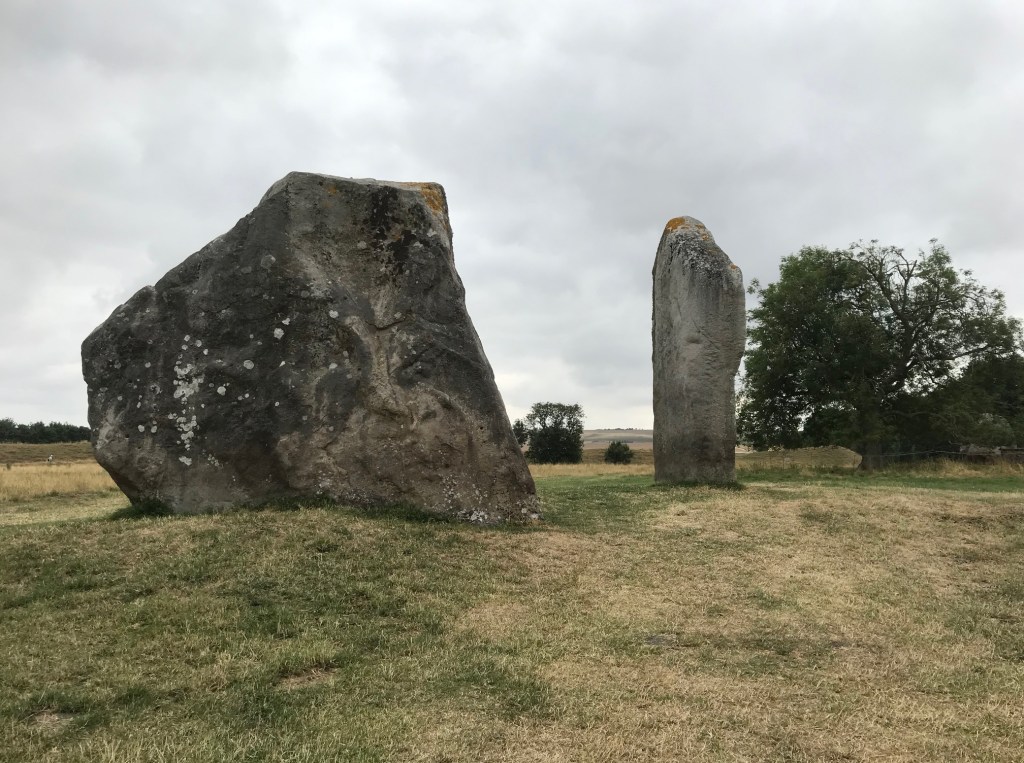
Gateway to Avebury Stone Circle
Gateway
One of the pitfalls of looking for someone to be your guide is that you might look for someone extraordinary. Someone wreathed in a golden glow or with thousands of online followers. Real guides are not gurus and don’t need fanfares. They often work quietly, encouraging their few students by their example of a balanced life, and their in-person presence. I’ve been lucky enough to meet several of these people with wisdom and experience, and they all watch TV just like everyone else. They live in this world, but have access to a greater one.
A guide’s function is to act as a gateway – to show you different ways of paying attention and to give you a structure which will enable you to make sense of these different modes of being. (see this post) You can learn a lot on the internet, (or I wouldn’t be writing this!) but most of this is information, not knowledge. In our tradition we make a distinction between these different forms of knowing – knowledge is only gained by direct experience and not second-hand from someone else. For example; it is the difference between someone explaining in words how to ride a bike from the actual practice and skill of balancing on that very wobbly saddle.
Why seek out an oral tradition?
The British Mysteries are mysterious. And the mystery is not easily explained. It needs to be grasped with all your senses if you are to catch a whiff of it. The old welsh bards called this whiff ‘Awen’.
Awen describes the invisible inspiration of the poets, or bards, or anyone possessed of a kind of flowing energy, or a force that flows with the essence of life.
Where does this inspiration come from?The Book of Taliesin describes this as proceeding from a trinity:
ban pan doeth peir ogyrwen awen teir
Translation: “the three elements of inspiration that came, splendid, out of the cauldron”.
Triskelion at Newgrange
But the word ‘peir’ (cauldron) can also mean ‘sovereign’ often with the broad meaning of God or the Divine. Awen is sometimes characterised as consisting of three sub-divisions – the ‘ogyrwen’ of the quotation, so ‘the ogyrwen of triple inspiration’ is suggestive of a structure of three-ness.
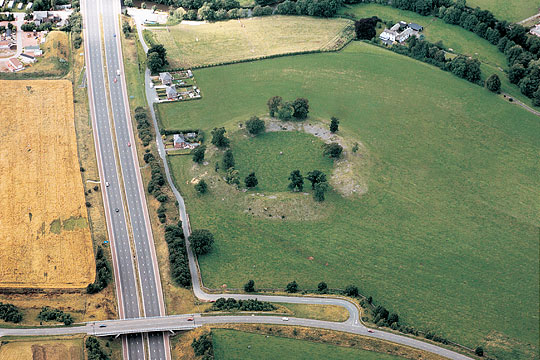
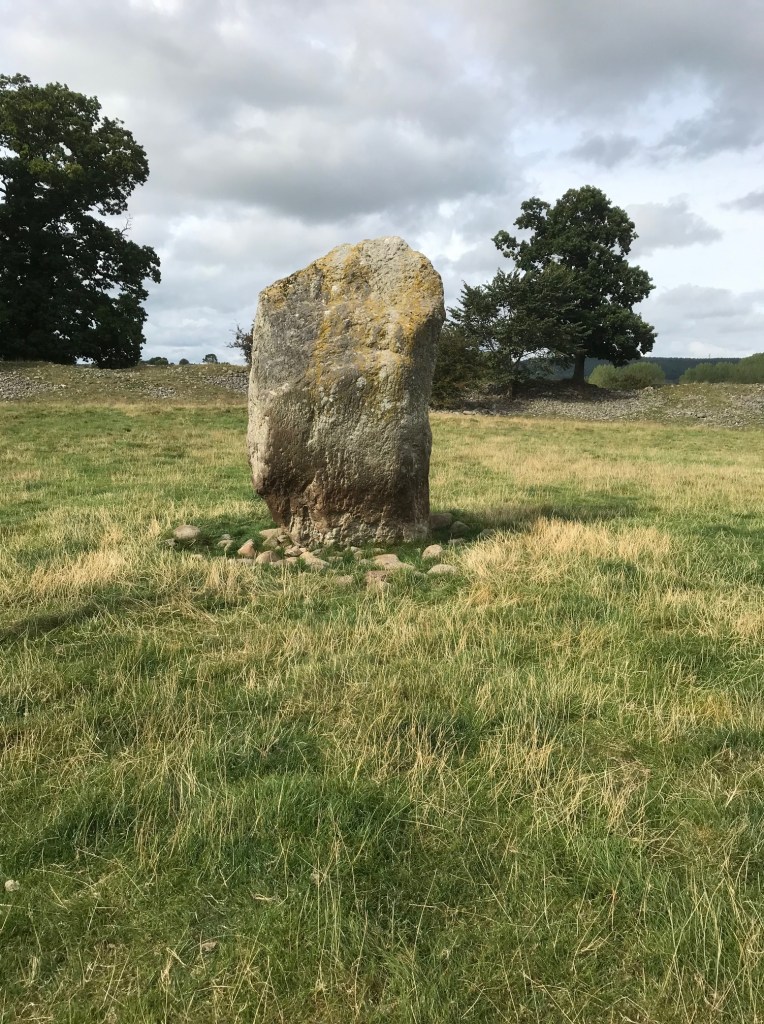
It survives as a single standing stone within a circular depression, around which is an impressive bank made of river pebbles culled from the nearby river. When you see the scale of the embankment, you realise just how much effort has gone into dragging that tonnage of river pebbles to the site. The site dates to the end of the Neolithic period or the beginning of the Bronze Age, which makes it about 4,500 years old.
Aerial view via English Heritage
No one knows exactly what this site was for. We can only look and imagine. But from historical records we know there were more standing stones here, and that the site was built near a spring and the confluence of the rivers Eamont and Lowther.
Map of 1769
The single remaining stone is like a spindle at the centre – and the large depression forms a navel in the landscape, which curves in towards the site on all sides. The stone is taller than a man, and is exactly at the centre of the circular boundary.
It is single, embedded in the earth, yet pointing up to the sky.
The stars have turned around this axis over millennia.
It occurs to me that this is like the thoughts that are always circling around us, ready to take root.
The thoughts don’t belong to us, though sometimes we mistake them for ours. But we can let them pass, just the way this standing stone lets the turning of the stars pass. Lifespan after lifespan, it has been a witness to the ever-changing sky.
One of the attractions of this standing stone is its aloneness, its stillness and its silence.





 Ynys Prydein - the British Mysteries